




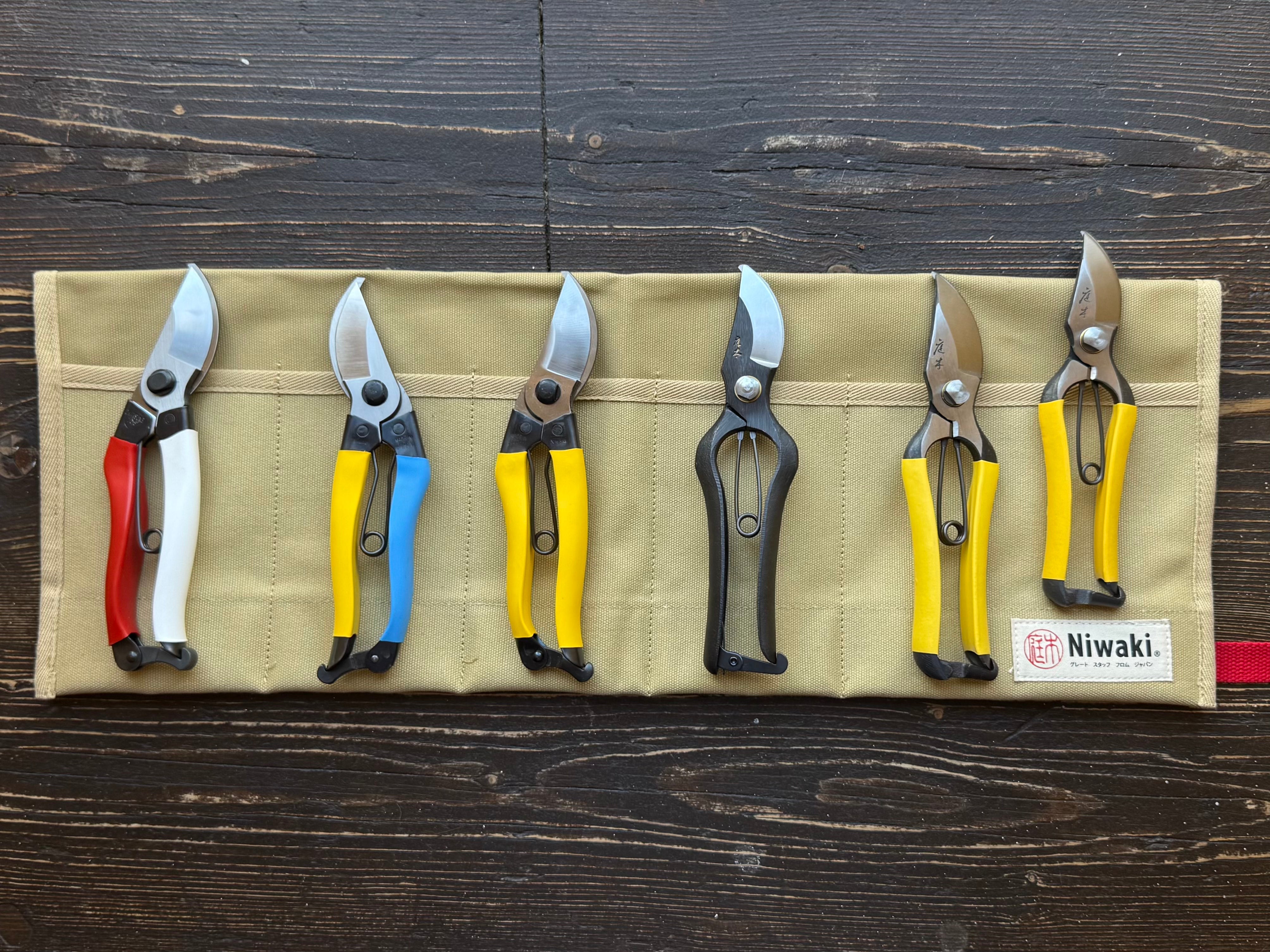
Which Niwaki Secateurs Should I Choose? A Complete Guide
Niwaki secateurs have become firm favourites with gardeners who want sharp, beautifully made pruning tools that feel simple, precise and satisfying to use. Made in Japan from high-quality steels, the range includes everything from straightforward everyday secateurs to professional workhorses and beautifully finished tools for the gardener who appreciates exceptional craftsmanship.
The difficulty is deciding which Niwaki secateurs to choose. Sentei, Mainichi, GR Pro, Lightweight, Daikiba and Kurumi can look relatively similar at first glance, but they differ considerably in weight, cutting capacity, hand size, steel and intended use.
This guide explains the differences and helps you choose the best pair for the way you garden.
Looking for Niwaki secateurs?
Explore our Niwaki collection, available online for delivery to most UK postcodes and from our Edinburgh plant shop.
Which Niwaki Secateurs Should I Choose? The Quick Answer
| Secateurs | Best for | Weight | Length | Max cut |
|---|---|---|---|---|
| Sentei | Best first pair / light pruning | 216g | 206mm | 7mm |
| Mainichi | Everyday garden pruning | 209g | 203mm | 10mm |
| GR Pro Standard | Keen gardeners and frequent use | 244g | 205mm | 15mm |
| GR Pro Small | Smaller hands with GR Pro strength | 198g | 186mm | 10mm |
| GR Pro Lightweight | Lighter grip and precision work | 188g | 190mm | 10mm |
| Daikiba | Rugged pruning and lower maintenance | 250g | 205mm | 15mm |
| Kurumi | Craftsmanship, gifting and considered pruning | 229g | 196mm | 10mm |
Maximum cutting diameters are a guide rather than a challenge. The hardness and condition of the plant material matters, and thicker cuts should always be made near the base of the blades. If a cut requires excessive force, move up to loppers or a pruning saw rather than forcing the secateurs.
Why Choose Japanese Secateurs?
Niwaki's story grew from founder Jake Hobson's time living and working in Japan in the 1990s, where he encountered the pruning tools, tripod ladders and working methods used by Japanese gardeners. The tools proved just as useful in British gardens, and Niwaki has since developed a large collection made with specialist Japanese makers.
All the secateurs in this guide are bypass secateurs. One sharpened cutting blade passes closely across the bypass beneath it, producing a clean, efficient cut rather than crushing the stem.
The other important characteristic is the steel. Most Niwaki secateurs use hard carbon steel that can take and retain an exceptionally sharp edge. That sharpness is one of the reasons they feel so satisfying to use, but it also means they should be used properly and cared for rather than treated as indestructible general-purpose cutters.
Niwaki Sentei Secateurs – Best First Pair
The Niwaki Sentei Secateurs are where we would start for many home gardeners. They offer the character and direct cutting action of forged Japanese secateurs in a straightforward, relatively accessible tool.
Made in Sanjo, Japan from KA-70 carbon steel, the Sentei have 55mm blades, weigh 216g and are rated for light pruning up to approximately 7mm diameter. A soft spring action and simple catch at the base give them an uncomplicated, traditional feel.
Niwaki itself describes Sentei as an introduction to Japanese secateurs and recommends moving to the GR Pro range if you expect to spend long days pruning or regularly tackle more substantial material.
Choose Sentei if:
- You are buying Japanese secateurs for the first time
- Your pruning is mostly light, regular garden maintenance
- You want an excellent everyday gardening gift
- You do not routinely cut thicker woody stems
- You want Niwaki quality without immediately moving into the professional ranges
Niwaki Mainichi Secateurs – Best Everyday All-Rounder
The Niwaki Mainichi Secateurs are designed as everyday, go-to secateurs for general pruning. The name suits them: these are the pair to reach for regularly rather than save for a particular specialist job.
Made in Japan from SK-85 carbon steel, the standard Mainichi measure 203mm overall, weigh 209g and use 55mm blades. Their bright yellow vinyl grips are easy to find in the garden, while the chunky lower catch remains easy to operate with cold, wet or gloved hands.
The Mainichi have a little more cutting capacity than Sentei and feel particularly well suited to the gardener who wants one uncomplicated pair for regular pruning, deadheading and cutting back around the garden.
Sentei vs Mainichi – what's the difference?
If your gardening mainly involves lighter pruning and you want the simplest, best-value route into Niwaki secateurs, we would choose Sentei.
If you want a pair to become your regular everyday secateurs, with grippy handles, a slightly broader range of use and a genuine left-handed version available, we would move up to Mainichi.
Neither is designed to replace loppers or a pruning saw for substantial branches.
What Are the Best Niwaki Secateurs for Left-Handed Gardeners?
The Niwaki Mainichi Left-Handed Secateurs are particularly important because Niwaki makes a genuine left-handed version rather than expecting left-handed gardeners simply to adapt to a right-handed tool.
The left-handed Mainichi uses the same practical everyday design as the standard version, with the blade arrangement configured specifically for left-handed use and a distinctive blue grip alongside the familiar yellow handle.
If you are left-handed and looking for an everyday Japanese secateur, this would be our first Niwaki model to consider.
Niwaki GR Pro Secateurs – Best for Keen Gardeners and Frequent Use
If you prune regularly and want a substantial pair that can comfortably become your main garden secateurs, the Niwaki GR Pro Secateurs are our all-round workhorse choice.
Drop forged and hand finished in Yamagata, Japan, they use tough S58C carbon steel with 55mm blades and a maximum recommended cut of approximately 15mm. At 244g, they feel more substantial than Sentei or Mainichi without becoming cumbersome.
The yellow vinyl grips make them easy to spot when put down in the garden, while a strong spring and solid lower catch suit repeated use. Niwaki positions the GR Pro for keen gardeners, landscapers and professionals who need precision but also expect their secateurs to work hard.
Choose GR Pro Standard if:
- You prune frequently
- You regularly tackle woody stems and shrubs
- You want one serious all-round pair of secateurs
- You prefer a substantial tool in the hand
- Durability and cutting capacity matter more than minimum weight
Mainichi vs GR Pro – which should I buy?
For ordinary home gardening and regular general pruning, Mainichi will be more than enough for many people.
The GR Pro makes sense if your garden is larger, your pruning is more frequent, you regularly work on shrubs and woody growth, or you simply want a harder-working tool with greater cutting capacity.
If we were choosing one Niwaki secateur for a keen gardener who expects to use it heavily for years, we would choose the GR Pro Standard.
Niwaki GR Pro Small – Best for Smaller Hands Without Losing the Workhorse Feel
The Niwaki GR Pro Small Secateurs take the character of the standard GR Pro and scale it down for smaller hands.
They measure 186mm overall and weigh 198g, with 50mm S58C carbon steel blades and a maximum recommended cutting diameter of around 10mm.
This is an important distinction: the GR Pro Small is not simply a delicate pruning tool. It is a compact version of the robust GR Pro idea, intended to give people with smaller hands better control and comfort without requiring them to use an unnecessarily large pair of secateurs.
Choose GR Pro Small if:
- You have smaller hands
- The standard GR Pro feels too large
- You still want the sturdy feel and S58C steel of the GR Pro range
- Your priority is fit and control rather than the absolute lightest possible secateur
Niwaki GR Pro Lightweight – Best for Lighter Grip and Precision
The Niwaki GR Pro Lightweight Secateurs answer a slightly different need from the GR Pro Small.
At approximately 188g, they are the lightest secateurs in this comparison. Their slender 50mm bypass blade is designed to reach into tighter spaces and make precise cuts, making them particularly useful for gardeners with smaller or weaker hands or anyone who values a more delicate, nimble feel.
Niwaki is quite open that making the blade slimmer involves a slight compromise in strength. These are about lightness and precision rather than brute force.
GR Pro Small vs GR Pro Lightweight
This is one of the easiest pairs to confuse.
Choose the GR Pro Small if you primarily need a smaller-sized version of a robust everyday secateur.
Choose the GR Pro Lightweight if your priority is reducing weight, using less hand strength and gaining access with a slimmer blade for more detailed pruning.
Both are rated for cuts around 10mm, but they feel different in purpose.
Niwaki Daikiba Secateurs – Best for Rugged, Lower-Maintenance Pruning
The Niwaki Daikiba Secateurs are the rugged option in the range.
Made in Sanjo, Japan, they use substantial SLD steel blades hardened to 60 HRC. The SLD steel is semi-stainless, giving it greater resistance to corrosion than Niwaki's traditional carbon-steel secateurs while still holding and taking an excellent edge.
At 250g with long 60mm blades and a maximum recommended cut of approximately 15mm, Daikiba feel purposeful in the hand. The broad bypass and slightly elongated blade allow both powerful cuts and useful precision, while a canvas holster is included.
Choose Daikiba if:
- You want a rugged garden workhorse
- You regularly prune woody shrubs and tougher stems
- You prefer a substantial pair of secateurs
- Greater resistance to corrosion appeals to you
- You like the practicality of an included canvas holster
Daikiba vs GR Pro – what's the difference?
Both are serious garden secateurs rated for cuts up to around 15mm, but their personalities are different.
The GR Pro is our choice for refined all-round daily pruning: balanced, precise and designed for gardeners who use their secateurs frequently.
The Daikiba feels more rugged and utilitarian, with longer blades, semi-stainless SLD steel and an included canvas holster. If you are prone to being less disciplined about carbon-steel care, Daikiba is also the more forgiving option.
Niwaki Kurumi Secateurs – Best for Craftsmanship and Gifting
The Niwaki Kurumi Secateurs occupy a very different place in the range.
Forged from KA-70 carbon steel in Sanjo, Japan, they feature beautiful walnut wood inlays in the handles. At 196mm long and 229g with 50mm blades, they are designed for careful, considered pruning up to approximately 10mm rather than maximum cutting power.
The important point is that Kurumi are not expensive because they cut branches twice as thick as other Niwaki secateurs. They don't. You are paying for craftsmanship, materials, finish and the pleasure of using and owning a particularly beautiful garden tool.
Choose Kurumi if:
- You value craftsmanship as much as raw performance
- You want a particularly beautiful pair of Japanese secateurs
- You enjoy careful, precise pruning
- You are looking for an exceptional gardening gift
- You want a tool that feels special every time you pick it up
They include a protective blade sheath.
Our Niwaki Secateur Recommendations by Gardener
Best first pair: Niwaki Sentei Secateurs
Best everyday all-rounder: Niwaki Mainichi Secateurs
Best for a keen gardener or frequent pruning: Niwaki GR Pro Standard
Best for smaller hands with a robust feel: Niwaki GR Pro Small
Best for lighter or weaker hands: Niwaki GR Pro Lightweight
Best for rugged, lower-maintenance use: Niwaki Daikiba Secateurs
Best luxury gardening gift: Niwaki Kurumi Secateurs
Best for left-handed gardeners: Niwaki Mainichi Left-Handed Secateurs
What About Okatsune Secateurs?
Alongside Niwaki's own secateurs, we also stock Okatsune, another highly respected name in Japanese pruning tools.
The Okatsune No.103 Secateurs are a classic standard-sized option with 55mm Hitachi carbon-steel blades, a 15mm maximum cut and a simple, direct action. They weigh 230g and are made in Onomichi, Japan.
For smaller hands, the Okatsune No.101 Small Secateurs reduce the overall length to 182mm and weight to 183g, with a 40mm blade and approximately 10mm maximum cut.
If you prefer a very simple, traditional Japanese secateur without needing to stay within the Niwaki-branded ranges, Okatsune is well worth considering.
How Thick a Branch Can Niwaki Secateurs Cut?
This depends on the model, but also on the plant.
A fresh green 10mm stem can be considerably easier to cut than a dry, dense 10mm woody branch. Maximum cutting figures should therefore be treated as sensible limits rather than targets.
For heavier cuts:
- Use the base of the blades nearest the pivot, where the tool is strongest
- Cut diagonally across the stem rather than straight through it
- Never twist the secateurs during a cut
- Do not force a cut that feels excessively difficult
- Switch to loppers or a pruning saw for material beyond the secateurs' comfortable capacity
This matters particularly with hard Japanese carbon steel. Its ability to take an excellent cutting edge is a strength, but abusing the blade can cause chipping.
How to Care for Niwaki Secateurs
Good Japanese secateurs are designed to be maintained rather than discarded. A simple routine will keep them cutting cleanly and help them last for many years.
1. Keep them clean
Remove sap, resin and surface rust after use. We use the Niwaki Mini Clean Mate, which acts as a rust and sap eraser.
Be more cautious with highly polished tools such as Kurumi: the Clean Mate is abrasive and can dull a fine polished finish.
2. Keep them protected
Dry carbon-steel tools after cleaning and apply a light coating of Niwaki Camellia Oil before storing them somewhere dry.
Some staining and patination of carbon steel is normal. Neglected moisture, however, can lead to rust.
3. Keep them sharp
A sharp blade makes pruning easier and creates a cleaner cut. The Niwaki #1000 Sharpening Stone is a useful general-purpose choice for regular secateur sharpening.
Remember that bypass secateurs have one cutting blade and one bypass. Do not sharpen the bypass as though it were a second blade, and Niwaki advises against routinely dismantling the secateurs for sharpening.
Are Niwaki Secateurs Worth It?
If you only prune occasionally and simply want the cheapest tool available, premium Japanese secateurs may be more than you need.
But for gardeners who use secateurs regularly, the appeal becomes easy to understand. A good pair feels precise, holds a sharp edge, can be cleaned and sharpened rather than replaced, and makes an everyday gardening task noticeably more enjoyable.
The key is buying the right model rather than automatically buying the most expensive one.
A home gardener doing light pruning may genuinely be better served by Sentei or Mainichi than by a much more expensive pair. Equally, someone spending hours pruning woody shrubs will appreciate the extra capability of GR Pro or Daikiba.
Frequently Asked Questions
Which Niwaki secateurs are best for beginners?
We would start with the Niwaki Sentei Secateurs. They are specifically positioned as an introduction to Japanese secateurs and are excellent for regular light garden pruning.
Which Niwaki secateurs are best for everyday gardening?
The Mainichi Secateurs are our everyday choice. They combine a manageable size and weight with grippy handles and a little more cutting capacity than Sentei.
Which Niwaki secateurs are best for professional or heavy use?
For frequent pruning and harder garden work, we would choose the GR Pro Standard. The Daikiba is another excellent option if you prefer a rugged tool with more corrosion-resistant SLD steel.
Which Niwaki secateurs are best for small hands?
The GR Pro Small is specifically proportioned for smaller hands while retaining the robust character of the GR Pro range.
What is the difference between GR Pro Small and GR Pro Lightweight?
GR Pro Small is primarily about a smaller physical fit. GR Pro Lightweight prioritises reduced weight and a slender blade for precision. If the standard secateurs simply feel too large, choose Small. If hand strength, fatigue or delicate access is your main concern, choose Lightweight.
Does Niwaki make left-handed secateurs?
Yes. The Niwaki Mainichi Left-Handed Secateurs are a genuine left-handed version, with the blade arrangement configured specifically for left-handed use. They are our first Niwaki model to consider for a left-handed gardener looking for an everyday Japanese secateur.
Do Niwaki secateurs rust?
Most Niwaki secateurs use carbon steel, which can stain and rust if left damp or dirty. Clean and dry the blades after use and protect them periodically with Camellia Oil. Daikiba uses semi-stainless SLD steel and is somewhat more resistant to corrosion.
How often should I sharpen Niwaki secateurs?
There is no need to sharpen a new pair immediately. Sharpen when you notice the cutting action becoming less crisp. For regularly used secateurs, a light periodic sharpen with a #1000 stone will maintain the edge better than waiting until the blade becomes very blunt.
Which Niwaki secateurs make the best gift?
For most gardeners, Sentei or Mainichi make excellent gifts because they are genuinely useful without requiring detailed knowledge of the recipient's pruning habits. For a very special gift, the walnut-handled Kurumi Secateurs are the standout choice.
Where are Niwaki secateurs made?
The secateurs in this guide are made in Japan by specialist makers. Different ranges come from different Japanese tool-making regions, including Sanjo, Yamagata and Hyogo.
Can I use Niwaki secateurs for houseplants?
You can use clean secateurs to prune larger houseplant stems, but for soft foliage, flowers, herbs and delicate green growth a smaller pair of plant snips or scissors will often give better control. Secateurs are primarily designed for garden pruning and woody or more substantial stems.
Shop Niwaki Secateurs at grow urban.
The best pair of secateurs is not necessarily the biggest or most expensive. It is the pair that fits your hand, suits the material you regularly prune and feels good enough that you actually enjoy using it.
For lighter home gardening, start with Sentei or Mainichi. For frequent, harder-working pruning, move to GR Pro or Daikiba. Choose GR Pro Small or Lightweight when hand size and comfort matter most, and choose Kurumi when craftsmanship is part of the pleasure.
Explore our full Niwaki collection online, or visit our Edinburgh shop to see our current range in person.
Please note: secateurs and other bladed tools are age-restricted products. By law, we cannot sell them to anyone under 18.