




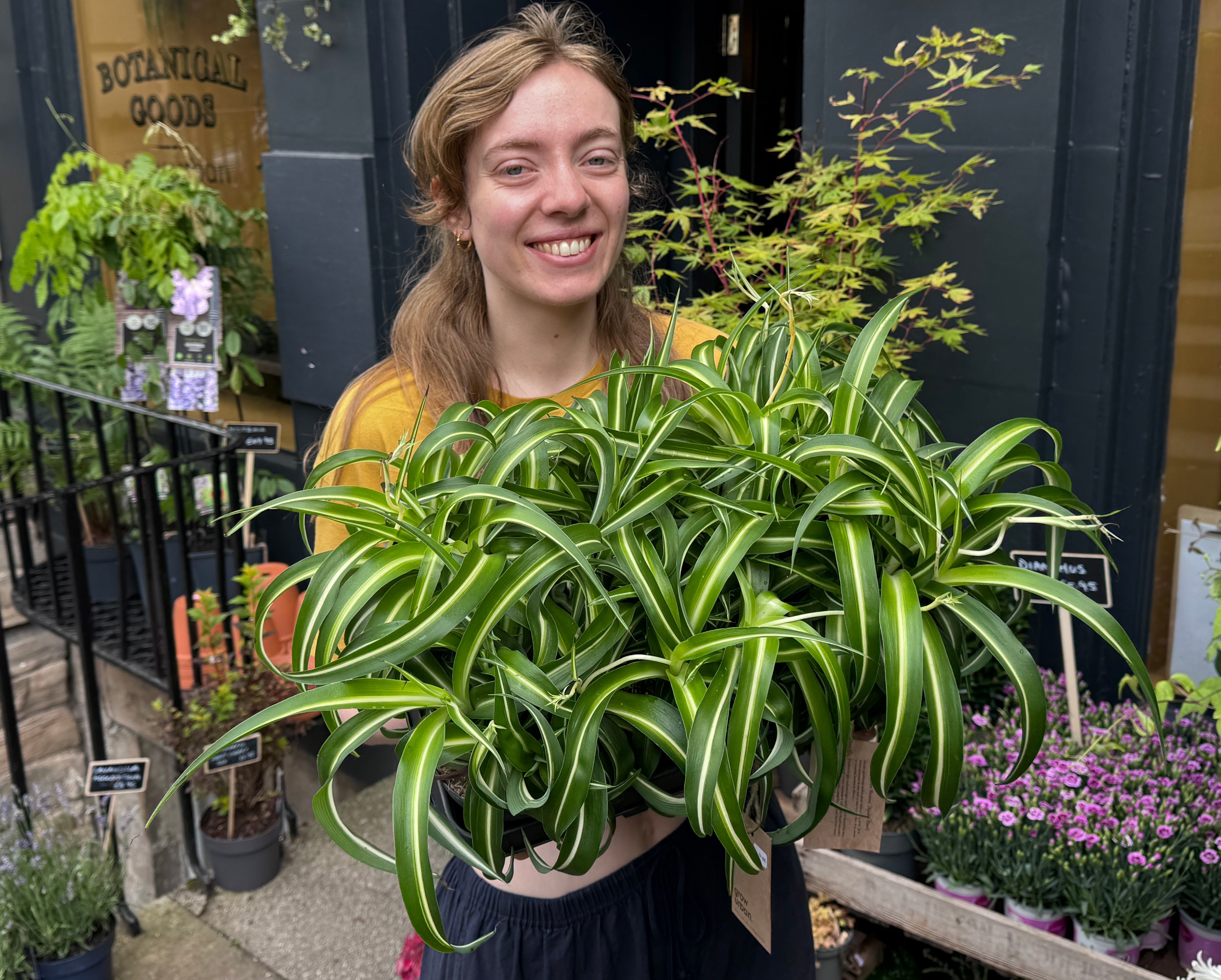
Spider Plant Care Guide: How to Look After Chlorophytum
Spider Plants are among the easiest and most rewarding houseplants you can grow. Known for their arching foliage, pet-friendly nature and ability to produce baby plantlets, they have remained popular indoor plants for generations.
Looking for Spider Plants?
Browse our collection of Spider Plants or explore our range of Easy Care Houseplants, Pet Friendly Plants and Indoor Plant Care products.
In this guide, we'll cover everything you need to know about Spider Plant care, including watering, light levels, feeding, propagation and solving common problems.
What is a Spider Plant?
Most Spider Plants grown as houseplants belong to the Chlorophytum genus, especially Chlorophytum comosum and its many cultivated varieties. They are best known for their long, arching leaves and the baby plantlets that form on trailing stems.
Spider Plants are ideal for beginners because they are adaptable, forgiving and happy in a wide range of indoor conditions. They are also one of the most popular pet-friendly houseplants, making them a great choice for homes with cats and dogs.
How Much Light Does a Spider Plant Need?
Spider Plants grow best in bright, indirect light, although they will tolerate lower light levels better than many houseplants.
Bright conditions help maintain strong variegation and encourage faster growth, but avoid prolonged direct sunlight, which can scorch the leaves.
Spider Plants are well suited to:
- Living rooms
- Home offices
- Bedrooms
- Bright bathrooms
- Shelves and hanging planters
Top tip: if your Spider Plant starts looking pale, grows slowly or produces fewer babies, moving it to a brighter position often helps.
How Often Should You Water a Spider Plant?
Spider Plants prefer evenly moist compost but dislike sitting in water.
Water thoroughly when the top few centimetres of compost feel dry. During spring and summer this may be around once a week, while in winter watering is often needed less frequently.
Always allow excess water to drain away and never leave the plant standing in water for extended periods.
Worth knowing: Spider Plants recover far more easily from slight underwatering than constant overwatering.
Why Does My Spider Plant Have Brown Tips?
Brown leaf tips are one of the most common Spider Plant problems. They are usually cosmetic, but they can be a sign that the plant is unhappy with its watering routine or growing conditions.
Possible causes include:
- Irregular watering
- Very dry air
- Mineral build-up from tap water
- Too much fertiliser
- Compost drying out for too long
You can trim brown tips away with clean scissors if desired. Try to follow the natural shape of the leaf so the cut is less noticeable.
If brown tips become widespread, try allowing tap water to stand overnight before use or switch to rainwater where possible.
Should You Feed a Spider Plant?
Spider Plants are not heavy feeders, but they do benefit from occasional fertiliser during the growing season.
Feed every four to six weeks during spring and summer using a balanced houseplant fertiliser. Avoid overfeeding, as this can contribute to brown leaf tips and weak growth.
You can browse our Indoor Plant Care collection for feeds, compost and other houseplant essentials.
How to Propagate Spider Plant Babies
One of the most enjoyable things about Spider Plants is how easily they produce baby plants.
These small plantlets, often called spiderettes or pups, form on long stems extending from the mother plant. Once they have developed small roots, they can be rooted in water or compost to create new plants.
To propagate Spider Plant babies:
- Wait until the baby plant has several leaves and visible roots
- Place the plantlet onto moist compost or into a small jar of water
- Keep it in bright, indirect light
- Allow roots to establish
- Cut the connecting stem once the baby plant is growing independently
This makes Spider Plants one of the easiest houseplants to multiply and share with friends.
Should I Remove Spider Plant Babies?
You do not have to remove Spider Plant babies. Leaving them attached creates a full, trailing display that looks especially good in hanging planters or on high shelves.
However, removing some baby plants can help the mother plant conserve energy, especially if it is small or struggling.
When Should You Repot a Spider Plant?
Spider Plants grow quickly and can become root bound over time. A slightly snug pot is not a problem, but very crowded roots can reduce growth and make watering more difficult.
Signs that repotting may be needed include:
- Roots growing from drainage holes
- The plant drying out very quickly after watering
- Reduced growth
- The plant lifting itself out of the pot
- A very tight mass of roots inside the pot
Choose a pot only slightly larger than the current one and use a good quality houseplant compost. A pot that is too large can hold excess moisture around the roots.
Are Spider Plants Safe for Cats and Dogs?
Yes. Spider Plants are widely regarded as pet-friendly houseplants and are a popular choice for homes with cats and dogs.
That said, some cats enjoy chewing the leaves. While the plant is considered pet friendly, it is still best to discourage pets from eating large amounts of any houseplant.
If you're looking for safe houseplants for pets, browse our collection of Pet Friendly Plants.
Common Spider Plant Problems
Yellow leaves
Yellow leaves are often caused by overwatering or poor drainage. Check that excess water can escape freely from the pot and allow the compost to dry slightly between waterings.
Drooping leaves
Drooping leaves may mean the plant is too dry, too wet or becoming root bound. Check the compost first before watering again.
No baby plants
Spider Plants usually produce more babies when mature and growing in bright, indirect light. A very young plant may simply need more time.
Brown leaf tips
Brown tips are often caused by inconsistent watering, dry air, mineral build-up from tap water or overfeeding.
Pale or faded leaves
Pale leaves can be caused by too much direct sun or not enough light. Move the plant to a position with bright, indirect light.
Frequently Asked Questions
Are Spider Plants easy to care for?
Yes. Spider Plants are among the easiest houseplants available and are ideal for beginners.
How often should I water a Spider Plant?
Water when the top few centimetres of compost feel dry. Avoid keeping the compost constantly wet.
Can Spider Plants grow in low light?
They tolerate lower light levels but grow best in bright, indirect light. Variegated varieties may lose some of their strong colouring in darker positions.
Why is my Spider Plant not producing babies?
Younger plants may need more time. Mature plants in brighter conditions are more likely to produce spiderettes.
Are Spider Plants pet friendly?
Yes. Spider Plants are considered one of the safest houseplants for homes with cats and dogs.
Can I grow a Spider Plant in a hanging pot?
Yes. Spider Plants are excellent in hanging pots because their arching leaves and baby plantlets create a trailing effect.
Your Spider Plant Care Checklist
- Place in bright, indirect light
- Avoid prolonged direct sun
- Water when the top of the compost feels dry
- Avoid waterlogged compost
- Feed every four to six weeks in spring and summer
- Repot when heavily root bound
- Trim brown tips if desired
- Propagate baby plants once roots have formed
- Enjoy one of the easiest pet-friendly houseplants available
Looking to Add a Spider Plant to Your Collection?
Spider Plants are easy to care for, pet friendly and perfect for beginners. Browse our collection of Spider Plants, discover more Easy Care Houseplants or shop our Pet Friendly Plants collection.