



Spanish Moss Care Guide: How to Care for Tillandsia usneoides
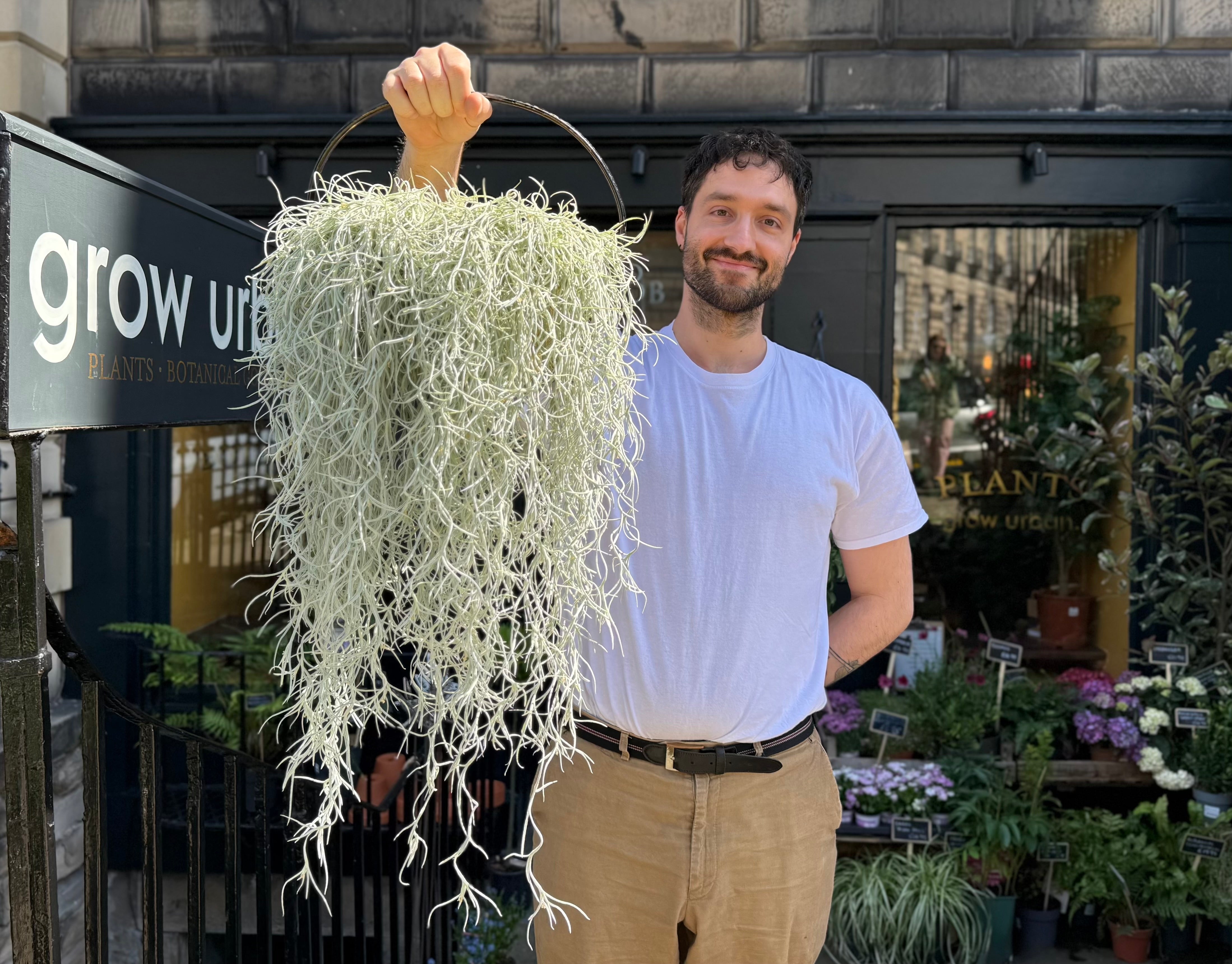
Spanish Moss, also known as Tillandsia usneoides or Old Man's Beard, is one of the most unusual Air Plants you can grow indoors. With its long, trailing silver-green strands, it brings instant texture and movement to shelves, hooks, branches and creative indoor displays.
Despite the name, Spanish Moss is not actually moss. It is a type of Tillandsia, which means it belongs to the Air Plant family and does not need compost to grow.
Looking for Spanish Moss?
Browse our Tillandsia usneoides Spanish Moss or explore our Air Plants collection.
What is Spanish Moss?
Spanish Moss is an epiphytic plant, which means it naturally grows attached to trees and branches rather than rooting into soil. It absorbs moisture through its leaves and uses trees simply for support.
In the home, it is usually grown hanging freely, draped over branches or displayed in bright, airy spaces where its trailing strands can be shown off properly.
Good to know: Spanish Moss cannot survive on air alone. It still needs regular moisture, bright indirect light and good airflow.
How Much Light Does Spanish Moss Need?
Spanish Moss grows best in bright, indirect light. A bright bathroom with a window, a kitchen or a well-lit room away from harsh direct sun can work well.
Avoid strong midday sun, especially in summer, as this can dry and scorch the strands.
If the plant is kept somewhere too dark, it may slowly decline, lose colour or become sparse.
How to Water Spanish Moss
Spanish Moss needs more regular moisture than many people expect. In most UK homes, especially with central heating, humidity alone is not enough.
You can water Spanish Moss in two main ways:
- Misting: mist thoroughly several times a week, especially in warm or dry rooms
- Soaking: soak in room temperature water for around 10 to 20 minutes every one to two weeks
After soaking, gently shake off excess water and hang the plant somewhere airy so it can dry properly.
Top tip: Spanish Moss should be hydrated regularly, but it should not stay wet for long periods.
What Water Should You Use?
Rainwater is ideal for Spanish Moss where possible. Filtered water or tap water that has been left to stand can also be used.
Avoid very hard water where possible, as mineral build-up can mark the fine strands over time.
Does Spanish Moss Like Humidity?
Yes. Spanish Moss enjoys moderate to high humidity, which is why it often does well in a bright bathroom or kitchen.
A plant mister is useful for keeping the strands hydrated between deeper waterings.
If your home is warm and dry, especially during winter, you may need to mist more often.
Where Should You Display Spanish Moss?
Spanish Moss looks best when allowed to trail naturally. Try hanging it from:
- Hooks
- Branches
- Open shelves
- Wall-mounted displays
- Terrarium-style arrangements with good airflow
Avoid closed glass containers with poor airflow, as trapped moisture can encourage rot.
Should You Feed Spanish Moss?
Spanish Moss can be fed lightly during spring and summer.
Add a very diluted plant feed, such as Liquid Gold Leaf, to its soaking water every few weeks during the growing season.
Do not overfeed. Like other Air Plants, Spanish Moss is slow growing and only needs gentle feeding.
Why is My Spanish Moss Turning Brown?
Brown Spanish Moss usually means one of two things: it is either too dry or it has stayed wet for too long.
Dry, crispy brown strands
This usually means dehydration, low humidity or too much heat. Increase misting, soak more regularly and keep the plant away from radiators or hot windows.
Soft, dark or mushy brown strands
This usually means rot. Improve airflow, reduce soaking time and make sure the plant dries properly after watering.
Why is My Spanish Moss Going Crispy?
Crispy Spanish Moss is usually a sign that the air is too dry or watering is too infrequent.
Try misting more often, soaking every one to two weeks and moving the plant to a brighter, more humid room.
Worth knowing: Spanish Moss often needs more moisture in winter because central heating dries the air.
Can Spanish Moss Grow Outside in the UK?
Spanish Moss is usually grown as an indoor plant in the UK. It may enjoy being outside during warm, mild weather, but it should be kept out of harsh direct sun and brought back indoors before temperatures drop.
It is not suitable for being left outside through cold UK winters.
Spanish Moss vs Other Air Plants
Spanish Moss is a type of Tillandsia, but its care is slightly different from rosette-forming Air Plants.
Because it grows in long, fine strands, it can dry out more quickly and may prefer frequent misting rather than occasional deep soaking alone.
For broader Air Plant advice, read our Air Plant Care Guide.
Frequently Asked Questions
Is Spanish Moss easy to care for?
Spanish Moss is fairly easy once you understand its need for moisture, bright indirect light and good airflow. It can struggle in very dry homes if not misted regularly.
How often should I water Spanish Moss?
Mist several times a week and soak every one to two weeks, adjusting depending on humidity, temperature and how quickly it dries.
Does Spanish Moss need soil?
No. Spanish Moss is an Air Plant and does not need compost or soil to grow.
Can Spanish Moss live in a bathroom?
Yes, a bright bathroom with natural light can be ideal because Spanish Moss enjoys humidity. Avoid dark bathrooms with no window.
Why is my Spanish Moss turning brown?
Dry, crispy browning usually means dehydration. Soft, dark browning usually means the plant is staying wet too long and may be rotting.
Is Spanish Moss pet friendly?
Spanish Moss is generally considered non-toxic, but pets should not be encouraged to chew houseplants. Keep it out of reach if your pet is curious.
Your Spanish Moss Care Checklist
- Place in bright, indirect light
- Avoid harsh direct sun
- Mist regularly, especially in dry rooms
- Soak every one to two weeks if needed
- Shake off excess water after soaking
- Allow good airflow around the strands
- Keep away from radiators and dry heat
- Feed lightly during spring and summer
Shop Spanish Moss
Spanish Moss is one of the most distinctive Air Plants you can grow, perfect for adding trailing texture and movement to your home.
Browse our Tillandsia usneoides Spanish Moss online, or explore our full Air Plants collection for more unusual no-soil houseplants. If you're interested in other Tillandsia species too, our Air Plant Care Guide covers their care in more detail.