



Air Plant Care Guide | How to Care for Tillandsia
Tillandsia, more commonly known as Air Plants, are some of the most unusual houseplants you can grow. Unlike most indoor plants, they do not need compost. Instead, they naturally grow attached to trees, rocks and other surfaces, taking in moisture and nutrients through their leaves.
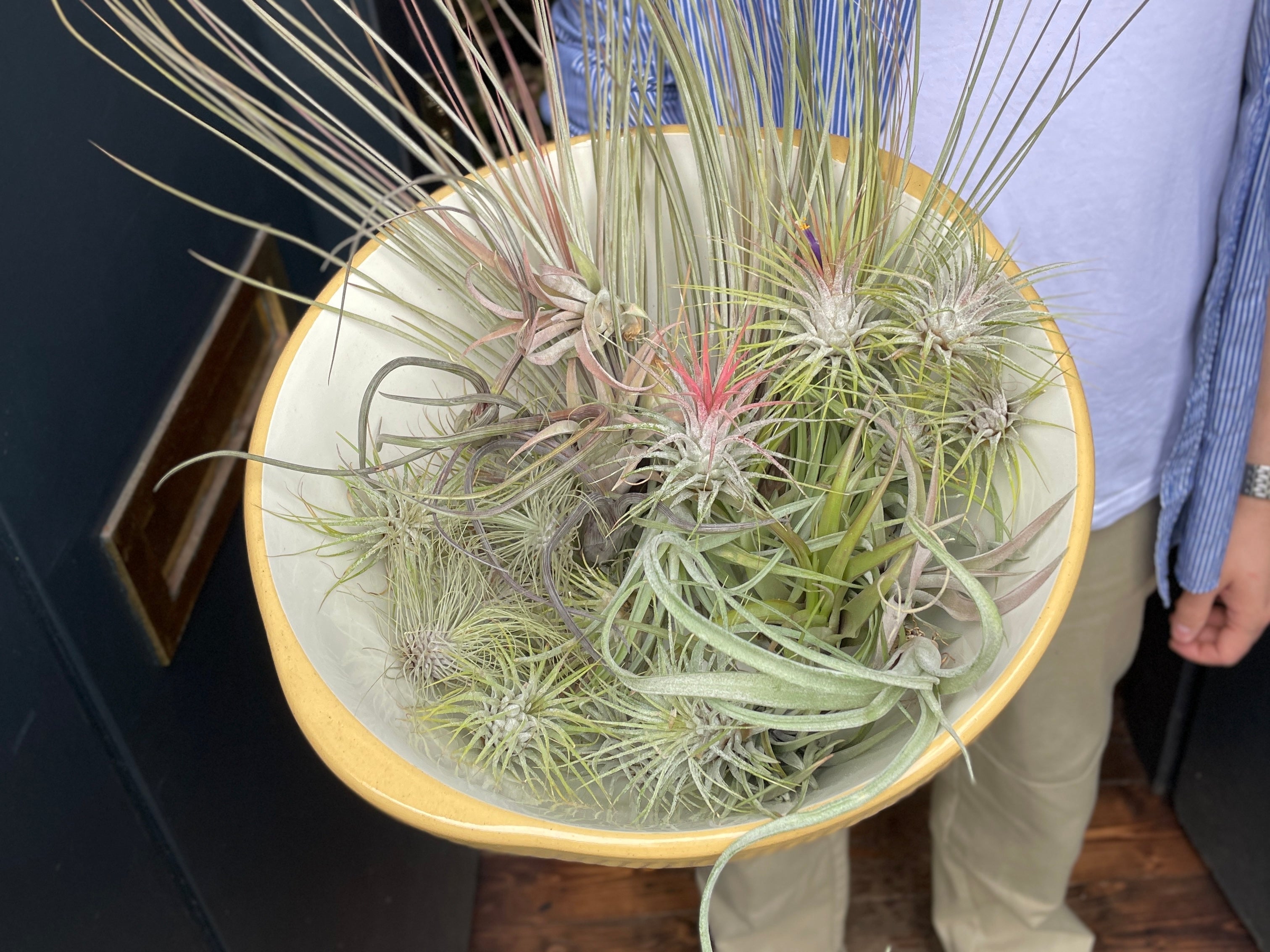
They are part of the Bromeliaceae family, making them relatives of Bromeliads, and there are hundreds of different species. Some form neat sculptural rosettes, while others trail beautifully, like Tillandsia usneoides, commonly known as Spanish Moss.
Looking for Air Plants?
Browse our Air Plants collection for Tillandsia and other unusual no-soil houseplants.
What are Air Plants?
Air Plants are epiphytes, which means they grow on other surfaces rather than rooting into soil. In the wild, many Tillandsia grow attached to trees, branches, rocks and cliff faces.
They do not take food from the trees they grow on. Instead, they use them for support while absorbing moisture from rainfall, mist and humidity through tiny structures on their leaves.
Good to know: Air Plants still need watering. The name can be misleading, as they cannot survive on air alone.
How Much Light Do Air Plants Need?
Tillandsia do best in bright, indirect light. A bright room, shelf near a window or naturally lit bathroom can work well.
Avoid strong, direct midday sun, especially in summer, as this can dry the leaves too quickly and cause scorching.
Greener, softer-leaved varieties usually prefer a little more humidity and slightly less direct light. Silvery, thicker-leaved varieties can often cope with brighter, drier conditions.
How to Water Air Plants
Air Plants need regular watering, but they also need to dry properly afterwards.
For most Tillandsia, soak or dunk the plant in room temperature water every one to two weeks. Leave it in the water for around 20 to 30 minutes, then remove it and shake off excess water.
After watering, place the plant upside down or on its side somewhere bright and airy until it has fully dried. This helps prevent water sitting in the centre of the plant, which can lead to rot.
Top tip: the watering itself is rarely the problem. Rot usually happens when water gets trapped and the plant cannot dry properly.
Should You Mist Air Plants?
Misting can be useful between deeper waterings, especially in warm rooms or during summer.
A plant mister is ideal for giving Air Plants a light refresh, but misting should not fully replace soaking unless the plant is being kept in a very humid environment.
If your home is warm and dry, a combination of occasional soaking and regular misting usually works best.
What Water Should You Use?
Rainwater is ideal for Tillandsia where available. You can also use filtered water or tap water that has been left to stand.
Avoid very hard water where possible, as mineral build-up can mark the leaves over time.
If using boiled water, make sure it has cooled completely before watering your Air Plants.
Do Air Plants Need Feeding?
Air Plants can benefit from occasional feeding during spring and summer.
Use a very dilute feed in the soaking water every few weeks during the growing season. We recommend using a gentle, high-quality plant food such as Liquid Gold Leaf, diluted carefully.
Do not overfeed. Air Plants are slow-growing and only need light feeding.
How to Display Air Plants
One of the joys of Tillandsia is that they can be displayed in creative ways. Because they do not need compost, they can sit on shelves, be placed in glass vessels, attached to bark or styled with stones and ceramics.
Just make sure your display allows good airflow and easy watering.
Avoid sealing Air Plants inside closed containers, as trapped moisture and poor airflow can quickly cause rot.
Do Air Plants Need Repotting?
No. Air Plants do not grow in compost, so they do not need repotting in the usual sense.
However, you may need to adjust how they are displayed as they grow, flower or produce offsets.
If you're looking after other houseplants too, our guide to repotting houseplants explains when and how to move traditional potted plants into a larger container.
What Happens When an Air Plant Flowers?
Many Tillandsia produce colourful flowers or bright bracts when mature. Flowering is a sign that the plant has reached an important stage in its lifecycle.
After flowering, the main plant will often slowly decline, but it should produce offsets, often called pups, before it dies back.
These pups can be left attached to form a clump or separated once they are large enough.
Spanish Moss and Other Tillandsia
Spanish Moss, or Tillandsia usneoides, is one of the most popular types of Air Plant we sell.
It has long, trailing strands and looks beautiful hanging from shelves, hooks, branches and decorative displays. Its care is slightly different from rosette-forming Air Plants, as it often benefits from more regular misting and higher humidity.
If you're growing Spanish Moss, we recommend reading our dedicated Spanish Moss Care Guide, which covers watering, humidity, light levels, common problems and styling ideas in more detail.
Common Air Plant Problems
Why is my Air Plant rotting?
Rot usually happens when water sits in the centre of the plant for too long. Always shake off excess water after soaking and allow your Air Plant to dry upside down or on its side.
Why does my Air Plant look dry or crispy?
Dry, curled or crispy leaves are usually a sign of dehydration, too much heat or not enough humidity. Increase misting and consider soaking more regularly.
Why has my Air Plant gone brown?
Browning can be caused by underwatering, sun scorch, rot or natural ageing after flowering. Check whether the plant feels dry and papery or soft and mushy.
Why is my Air Plant not growing?
Air Plants are naturally slow growers. Make sure they receive bright, indirect light, regular watering and occasional feeding during spring and summer.
Frequently Asked Questions
Are Air Plants easy to care for?
Yes, once you understand their watering routine. The key is to water them regularly but allow them to dry fully afterwards.
Can Air Plants live without soil?
Yes. Tillandsia naturally grow without soil, absorbing moisture and nutrients through their leaves.
How often should I water Air Plants?
Most Air Plants need soaking or dunking every one to two weeks, with occasional misting between waterings depending on your home.
Can Air Plants live in a bathroom?
Yes, if the bathroom has natural light and good airflow. A bright bathroom can be a great place for Air Plants.
Do Air Plants die after flowering?
The main plant often slowly dies back after flowering, but it usually produces pups first. These can continue growing into new plants.
Your Air Plant Care Checklist
- Place in bright, indirect light
- Soak or dunk every one to two weeks
- Mist between waterings if your home is dry
- Shake off excess water after soaking
- Dry upside down or on the side after watering
- Avoid closed containers with poor airflow
- Feed lightly during spring and summer
- Expect slow growth
Shop Air Plants
Air Plants are fascinating, sculptural and wonderfully different from traditional houseplants. With the right balance of light, moisture and airflow, they can thrive beautifully in UK homes.
Browse our Air Plants collection or explore Spanish Moss if you're looking for a trailing Tillandsia with real character. For more detailed advice, visit our Spanish Moss Care Guide.