


%20is%20one%20of%20the%20best%20houseplants%20for%20bringing%20colour%20into%20the%20home%20during%20winter,%20producing%20masses%20of%20pink,%20red,%20white,%20purple%20and%20occasionally%20yellow%20or%20orange%20flowe...)
Christmas Cactus Care Guide: Watering, Light & How to Get It to Flower
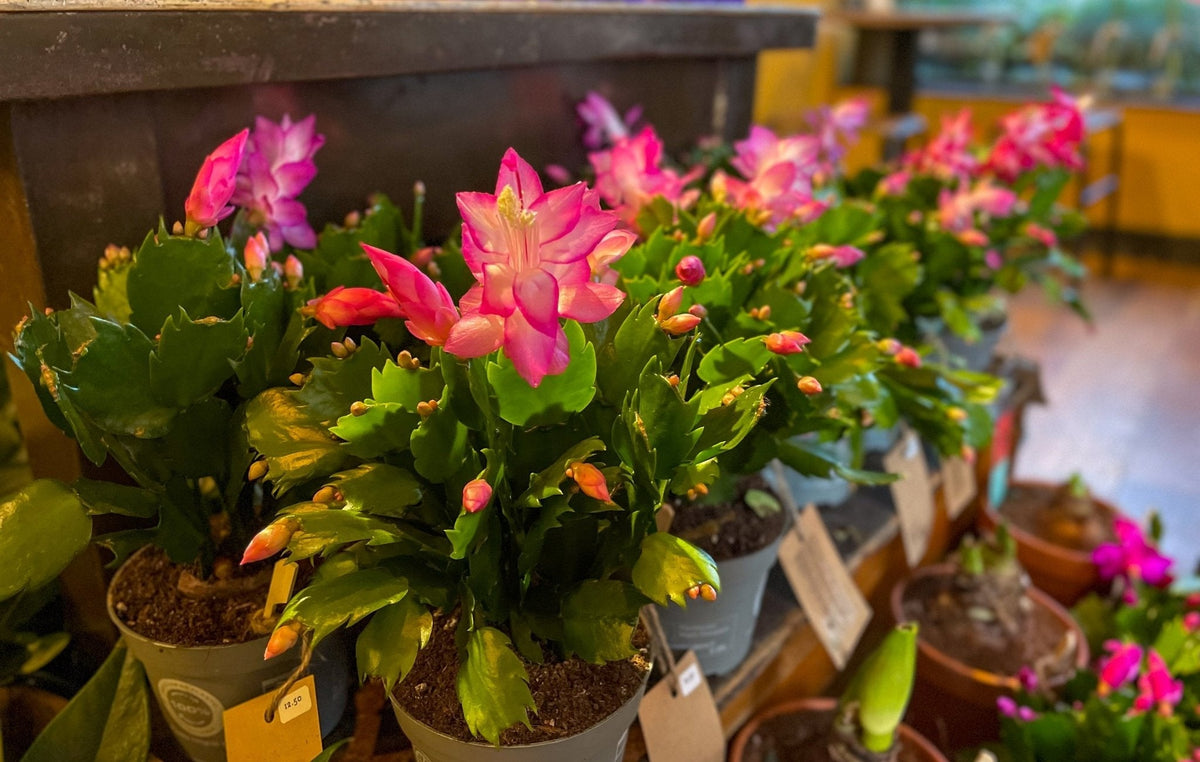
Christmas Cactus (Schlumbergera) is one of the best houseplants for bringing colour into the home during winter, producing masses of pink, red, white, purple and occasionally yellow or orange flowers just when most other plants have slowed down.
Despite the name, a Christmas Cactus is not a desert cactus. Schlumbergera comes from tropical forests in South America, where it grows in warm, humid conditions with filtered light. That means its care is quite different from the sun-loving, drought-tolerant cacti you might keep on a bright windowsill.
The good news is that Christmas Cacti are relatively easy to grow and can live for many years. The trickiest part is usually encouraging them to flower again – and once you understand the combination of cooler temperatures, shorter days and slightly reduced watering they need in autumn, that becomes much easier too.
Browse our current Schlumbergera plants or explore more pet-friendly houseplants. Our Christmas Cacti are available seasonally, so varieties and flower colours change throughout autumn and winter.
Christmas Cactus Care at a Glance
| Care | What a Christmas Cactus Needs |
|---|---|
| Light | Bright, indirect or filtered light |
| Water | Keep lightly moist while growing; allow the top few centimetres to dry slightly between waterings |
| Temperature | Around 18–20°C while growing and flowering; cooler conditions help trigger buds |
| Humidity | Moderate to higher humidity |
| Feeding | Feed during active growth from spring to early autumn |
| Flowering | Usually late autumn through winter |
| Pet safe? | Generally regarded as non-toxic to cats and dogs |
What Is a Christmas Cactus?
Christmas Cacti belong to the genus Schlumbergera, a group of epiphytic cacti native to tropical forests in South America. In the wild, they grow in organic material collected around tree branches and rocky crevices rather than in dry desert soil.
The flattened green sections that look like leaves are actually segmented stems. As the plant matures these gradually arch and trail, with flowers forming at the tips of the stems during late autumn and winter.
This rainforest background explains why a Christmas Cactus prefers bright but indirect light, more regular moisture and higher humidity than most traditional desert cacti.
How Much Light Does a Christmas Cactus Need?
Christmas Cacti grow best in bright, indirect or filtered light. An east- or west-facing window can work particularly well, or place the plant a little back from a brighter south-facing window.
Avoid prolonged strong midday sunshine through glass. Too much direct sun can cause the green stem segments to become pale, reddish or scorched.
During autumn, light also plays an important part in flowering. Christmas Cacti respond naturally to the shorter days and longer nights of the season, so avoid keeping the plant beside a strong artificial light source that remains switched on late into the evening while it is trying to form buds.
How Often Should You Water a Christmas Cactus?
Unlike a desert cactus, Schlumbergera should not routinely be left completely dry for long periods.
During spring and summer, water when the upper few centimetres of compost have started to dry. Water thoroughly, allow excess water to drain away and then wait until the surface begins to dry again before watering.
The aim is light, consistent moisture without waterlogging. Permanently wet compost can cause root problems, while allowing the plant to become extremely dry can lead to shrivelled stems.
From around mid-September, when you are encouraging the plant to form flower buds, reduce watering slightly and allow a little more of the compost to dry between waterings. Once flower buds are clearly visible, return to more regular watering while the plant develops and opens its flowers.
What Temperature Does a Christmas Cactus Like?
For most of the year, Christmas Cacti are comfortable at normal indoor temperatures of around 18–20°C.
Temperature becomes particularly important if you want the plant to flower reliably. From around the middle of September, moving it somewhere cooler – ideally around 12–15°C – can help trigger the formation of flower buds.
You do not need to obsess over an exact number. The important thing is that the plant experiences a noticeable cooler spell rather than remaining in a constantly warm centrally heated room throughout autumn.
How Do You Get a Christmas Cactus to Flower?
This is the question we are asked most often.
To encourage a Christmas Cactus to flower, give it a cooler, slightly drier rest period from around mid-September. Natural shortening day length also helps signal to the plant that it is time to produce buds.
Move it to a cooler room if possible, reduce watering slightly and let it experience naturally darker evenings. Avoid placing it somewhere that stays brightly lit by lamps until late at night.
You do not need to put a Christmas Cactus into complete darkness for weeks. The aim is to reproduce the cooler temperatures and longer nights of autumn rather than shut the plant in a cupboard.
Once you can see small flower buds forming at the ends of the stems, move the plant back into normal indoor conditions of around 18–20°C and resume more regular watering.
After flowering, another slightly cooler and drier rest period through late winter can help prepare the plant for its next season of growth.
Why Isn't My Christmas Cactus Flowering?
If a healthy Christmas Cactus produces lots of green growth but no flowers, the most likely problem is that it has not experienced enough of a seasonal change.
Common reasons include:
- Keeping the plant too warm throughout autumn
- Bright artificial lighting late into the evening
- Continuing to water heavily when the plant should be having a short autumn rest
- Very low daytime light levels
- A plant that is still very young or has relatively few stem tips
Flowers develop from the ends of the stems, so an older, well-branched plant naturally has the potential to produce a much larger display.
Why Are the Buds Falling Off My Christmas Cactus?
Bud drop can be frustrating, particularly when the plant looked as though it was about to produce a spectacular display.
The most common cause is a sudden change in conditions. Large temperature fluctuations, cold draughts, excessive heat or overwatering can all cause developing buds to drop.
Once a plant is covered in buds, try to keep its environment reasonably stable. Keep it away from radiators and cold exterior doors, water consistently without soaking the compost and avoid repeatedly moving it between very different locations.
If you have just bought a flowering Christmas Cactus, some reaction to the journey from the grower to the shop and then into your home is always possible. Keep it protected from cold weather while transporting it and give it a bright, stable position once home.
Does a Christmas Cactus Need Humidity?
Schlumbergera naturally grows in humid forest environments and appreciates more humidity than a desert cactus.
Normal household humidity is often sufficient, but avoid positioning the plant immediately beside a radiator or other source of hot, dry air. Bathrooms and kitchens can work well provided there is enough natural light.
Misting is optional rather than essential. If your home is particularly dry, grouping plants together or using a pebble tray can help create a slightly more humid environment around the plant.
What Compost Should I Use for a Christmas Cactus?
Christmas Cacti need a free-draining growing medium that retains some moisture without becoming dense or waterlogged.
A specialist cactus compost can work well, as can a free-draining indoor plant mix with additional material to improve aeration and drainage.
You can browse our indoor plant compost and repotting mixes, including specialist cactus and succulent compost.
Avoid putting a small Christmas Cactus straight into a very large pot. Schlumbergera generally grows well when its roots are fairly snug.
When Should I Repot a Christmas Cactus?
There is no need to repot a Christmas Cactus simply because another year has passed.
A newly purchased plant can often remain happily in the same nursery pot for a couple of years. After that, consider repotting when the roots have filled the existing pot or the plant is drying out unusually quickly.
Spring, after the winter flowering and resting period, is a good time to repot. Choose a new pot only slightly larger than the existing one rather than moving the plant into a dramatically oversized container.
Should I Feed a Christmas Cactus?
Feed during the active growing period from spring through to early autumn. A balanced liquid houseplant feed or a suitable cactus and succulent fertiliser can both be used.
We stock Cactus & Succulent Focus and other indoor plant feeds, as well as Liquid Gold Leaf for general indoor plant feeding.
Stop or significantly reduce feeding once the plant enters its cooler autumn rest period. Feeding heavily during winter is unnecessary.
The most common mistakes are treating it like a desert cactus, letting it become completely dry for too long or keeping it permanently wet. Think bright filtered light, gentle moisture and good drainage.
How Do You Prune a Christmas Cactus?
Christmas Cacti need very little pruning, but an older plant can become long or slightly uneven.
After flowering, remove individual stem sections at the joints to shorten particularly long stems and encourage the plant to branch. More branches mean more growing tips, and because flowers form at the ends of the stems this can also help create a fuller future display.
Always remove complete segments rather than cutting through the middle of one.
How Do You Propagate a Christmas Cactus?
Schlumbergera is wonderfully easy to propagate, which is one reason Christmas Cacti are often passed between generations of families.
In spring, gently twist or cut off a short section containing a couple of healthy stem segments. Leave it somewhere dry for a day or two so the cut end can dry slightly.
Then place the base of the cutting shallowly into a small pot of free-draining propagation compost. Keep it somewhere bright but out of direct sun and water sparingly while new roots develop.
Several cuttings can be planted around the edge of the same small pot to create a fuller plant.
Christmas Cactus vs Thanksgiving Cactus: What's the Difference?
The common names around Schlumbergera can be confusing, and plants are often sold fairly loosely as Christmas Cacti regardless of the exact species or hybrid.
The plant commonly called the Thanksgiving Cactus, Schlumbergera truncata, tends to have more pointed, tooth-like edges on its stem segments and often starts flowering slightly earlier.
The traditional Christmas Cactus, Schlumbergera × buckleyi, generally has softer, more rounded or scalloped edges to the segments and tends to flower a little later.
For most houseplant owners, the distinction makes very little difference to day-to-day care. Both enjoy similar light, watering and temperature conditions and both can produce spectacular displays over the winter period.
Is an Easter Cactus the Same as a Christmas Cactus?
No. Although they look similar and were historically grouped together, the plants commonly known as Easter Cacti are now generally classified as Rhipsalidopsis rather than Schlumbergera.
As the name suggests, Easter Cacti usually flower in spring rather than around Christmas. Their flowers also have a more open, star-like appearance compared with the more tubular flowers of a typical Christmas Cactus.
Is Christmas Cactus Safe for Cats and Dogs?
Christmas Cactus is generally regarded as non-toxic to cats and dogs, making Schlumbergera a useful choice for pet-friendly homes.
That does not mean it is a good idea for pets to eat large quantities of it – chewing any unfamiliar plant material can potentially cause stomach upset – but it is not considered a toxic houseplant.
You can find more options in our collection of pet-friendly houseplants.
Frequently Asked Questions About Christmas Cactus Care
How often should I water a Christmas Cactus?
Water when the upper few centimetres of compost have started to dry rather than following a fixed weekly schedule. Keep the plant more consistently moist during active spring and summer growth, then reduce watering slightly during its autumn flowering rest period.
Can a Christmas Cactus sit in direct sunlight?
A little gentle morning or evening sun is usually fine, but avoid prolonged strong midday sunshine through glass. Christmas Cacti naturally grow in filtered forest light rather than exposed desert sun.
When should I start preparing my Christmas Cactus to flower?
Start from around mid-September. Give the plant cooler conditions, slightly less water and naturally longer nights until flower buds begin to develop.
Do I need to put my Christmas Cactus in the dark?
No. Total darkness is not necessary. Natural shortening days and longer nights help trigger flowering, so a cooler room where the plant is not exposed to bright artificial light late into the evening is usually sufficient.
What temperature helps a Christmas Cactus flower?
A cooler autumn period of roughly 12–15°C can help encourage flower bud formation. Once buds appear, normal indoor temperatures of around 18–20°C are suitable.
Why does my Christmas Cactus flower at the wrong time?
Flowering is influenced by both temperature and day length. If autumn remains unusually warm, or the plant receives artificial light late into the evening, flowering can be delayed. Some Schlumbergera cultivars also naturally flower earlier or later than others.
How long can a Christmas Cactus live?
With good care, Schlumbergera can be extremely long lived. Mature plants are often kept for many years and are easy to propagate from cuttings, which is why they are sometimes passed between generations.
Should I deadhead a Christmas Cactus?
You can gently remove faded flowers to keep the plant looking tidy, although it is not essential. Avoid damaging the green stem segments while doing so.
Does a Christmas Cactus need cactus compost?
A specialist cactus compost is a straightforward choice, but the most important thing is good drainage and aeration. Avoid dense compost that remains saturated for long periods.
Buying Christmas Cactus in the UK
Christmas Cacti normally appear in shops from autumn onwards as flower buds begin to form, with the widest choice of colours usually available in the run-up to Christmas.
When choosing a plant, look for one with plenty of unopened buds rather than one where every flower has already opened. This should give you a longer display once you get it home.
At grow urban. in Edinburgh we stock different Schlumbergera colours and sizes throughout the season, including classic red, pink and white flowering plants when available.
Browse our current Christmas Cactus and Schlumbergera plants, explore our pet-friendly houseplants or browse all indoor plants.
Christmas Cactus Care: The Simple Version
If you remember nothing else, remember that a Christmas Cactus is a rainforest cactus, not a desert cactus.
Give it bright indirect light, keep it lightly moist but never waterlogged and feed while it is actively growing. Then, from around mid-September, provide a cooler spell, slightly less water and naturally longer nights to encourage flower buds.
Once the buds appear, return it to normal indoor conditions, keep the watering consistent and enjoy one of the best flowering houseplants of the winter.
And if yours doesn't flower perfectly on schedule, don't panic. Schlumbergera are long-lived plants and, once you find the conditions they like in your home, they tend to become easier and more impressive with every passing year.