


10 Best Low Light Houseplants for UK Homes
Do you have a darker spot at home that feels impossible to fill with plants? Maybe it’s a north-facing room, a shady hallway or a corner that sits a little too far from the window.
Most houseplants prefer bright, indirect light, but there are some brilliant plants that can cope with lower light conditions. The key word here is cope. Low light plants will tolerate shadier spots, but they still need some natural light to survive.
If you’re looking for plants for a completely windowless room, we’ve written a separate guide here: Plants For Bathrooms Without Windows: What Actually Works?
When choosing a plant for a darker space, look for darker green leaves. Many shade tolerant plants naturally grow beneath the canopy of larger trees, where they have adapted to make the most of limited light. Plants with highly variegated, pale or brightly patterned leaves usually need brighter conditions to keep their colour and grow well.
It’s also worth remembering that plants grow more slowly in lower light. They may survive happily, but they won’t grow as quickly as they would in a brighter room. You’ll also need to water less often, as the compost will dry out more slowly.
With that in mind, here are our favourite low light houseplants for UK homes.
Looking for plants that can cope with lower light?
Browse our Low Light Houseplants collection, hand-picked for shady rooms, north-facing spaces and darker corners.
1. ZZ Plant
The ZZ Plant, or Zamioculcas zamiifolia, is one of the toughest houseplants you can buy. It has glossy, dark green leaves and copes incredibly well in lower light.
It’s also a great choice if you’re new to houseplants or tend to forget about watering. Let the compost dry out fully before watering again. In a darker spot, this could be as little as once every few weeks.
2. Snake Plant
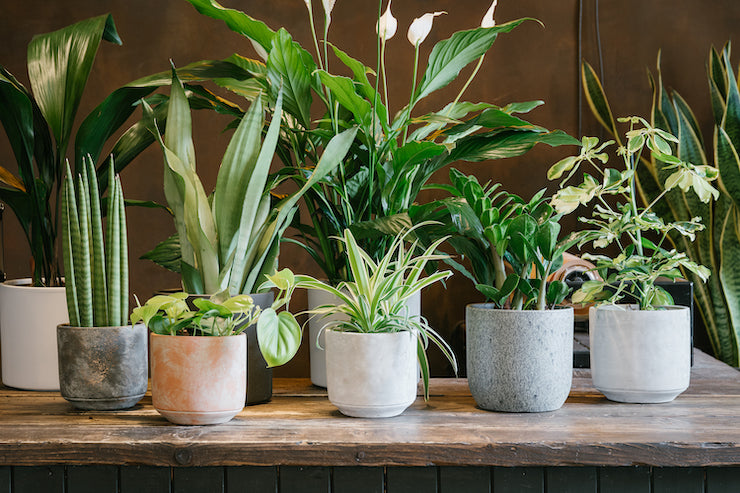
Snake Plants, also known as Sansevieria, are another brilliant choice for darker rooms. Their upright, architectural leaves make them perfect for hallways, bedrooms and corners where you want something sculptural but easy to look after.
They store water in their leaves, so they prefer to dry out completely between waterings. If in doubt, leave it a little longer.
3. Aspidistra
The Aspidistra is sometimes called the Cast Iron Plant, and for good reason. It’s wonderfully tolerant of shade, draughts and irregular watering.
This is a classic Victorian houseplant and still one of the best options for darker homes. It has elegant, dark green leaves and a very calm, understated look.
4. Dracaena
Dracaena come in lots of shapes and sizes, from tall statement plants to smaller, compact varieties. Many are very forgiving and cope well in lower light.
They prefer to dry slightly between waterings and are a good option if you want something with height without choosing a palm.
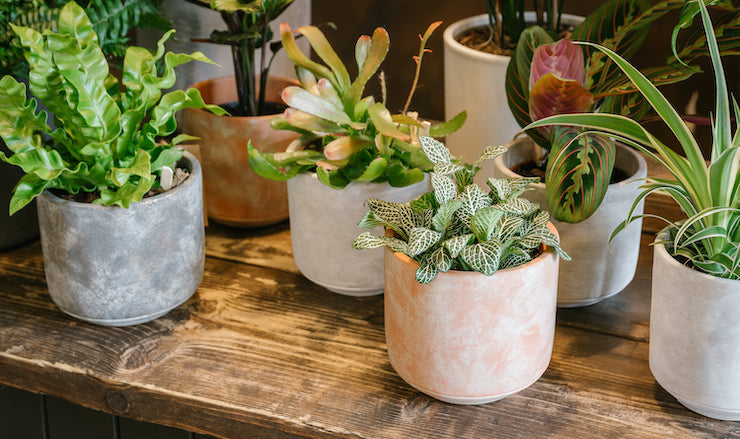
5. Scindapsus pictus
Scindapsus pictus, often called Satin Pothos, is a beautiful trailing plant with soft silver markings on the leaves.
It will grow more quickly in brighter, indirect light, but it can still cope in a shadier spot. It looks lovely trailing from a shelf, bookcase or hanging pot.
6. English Ivy
English Ivy, or Hedera helix, is a lovely trailing option for cooler, darker rooms. It’s especially useful if you want something to soften a shelf or trail down from a pot.
Ivy prefers to be kept on the cooler side and likes the compost to stay lightly moist, rather than drying out completely.
7. Boston Fern
Boston Ferns naturally grow in filtered light, so they can cope well with softer, shadier conditions.
They do like humidity, so they’re a good option for bathrooms with a window. Keep the compost lightly moist and avoid placing them near radiators or dry heat.
8. Parlour Palm
The Parlour Palm is a classic houseplant that has been loved for generations. It has soft, elegant leaves and copes well in lower light, making it ideal for living rooms, bedrooms and offices.
It doesn’t like being overwatered, so allow the top of the compost to dry before watering again.
9. Peace Lily
Peace Lilies, or Spathiphyllum, are known for their glossy green leaves and elegant white flowers.
They can cope with lower light, although they will usually flower better in brighter, indirect light. They’re also very good at telling you when they’re thirsty, as the leaves will start to droop slightly.
10. Aglaonema
Aglaonema, also known as Chinese Evergreen, is one of the most adaptable houseplants. It’s easy going, attractive and generally very forgiving.
Green varieties tend to cope best in lower light. More colourful or highly patterned varieties usually need brighter conditions to keep their markings looking their best.
Can plants live in a room with no windows?
No plant can live in complete darkness. Plants need light to photosynthesise, so a windowless room will always be difficult without extra help.
If you have a bathroom, hallway or internal room with no natural light, you have two options. You can either rotate plants between a brighter room and the darker space, or you can use a grow light.
Our Mushroom Grow Light and Pianta LED Grow Light Bulb are both useful options for giving plants the light they need in trickier spaces.
Our final advice
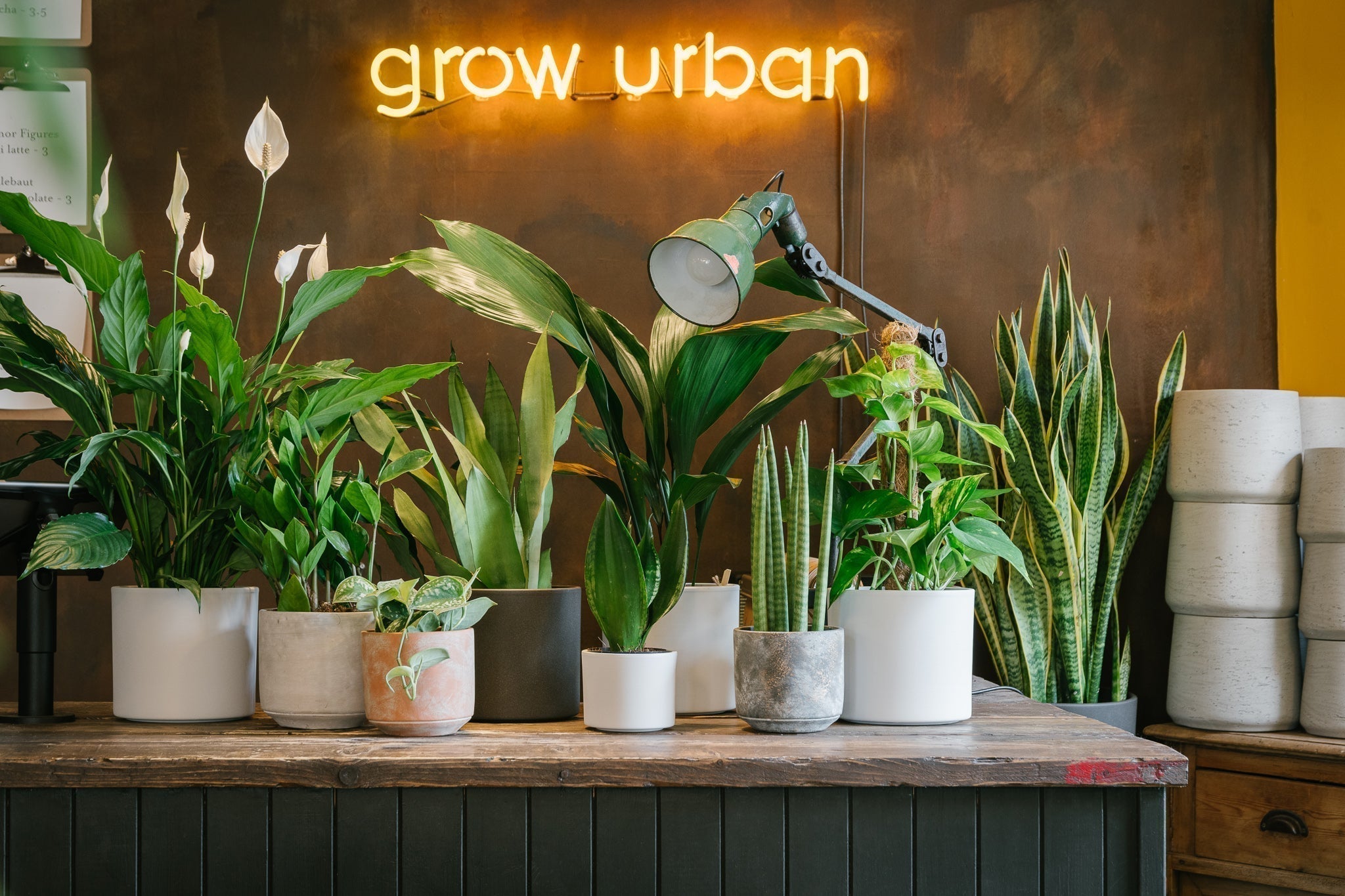
If you’re choosing a plant for a darker room, go for something naturally tough and dark green. ZZ Plants, Snake Plants and Aspidistra are usually the safest choices.
Just remember that low light does not mean no light. Your plant may grow more slowly, need less water and look a little less vigorous than it would in a brighter spot, but with the right choice it can still be perfectly happy.
You can browse our full collection of low light houseplants online, or pop into our Edinburgh shop and we'll help you choose the right plant for your home.