


Oxalis triangularis Care Guide UK | How to Grow Purple Shamrock Indoors
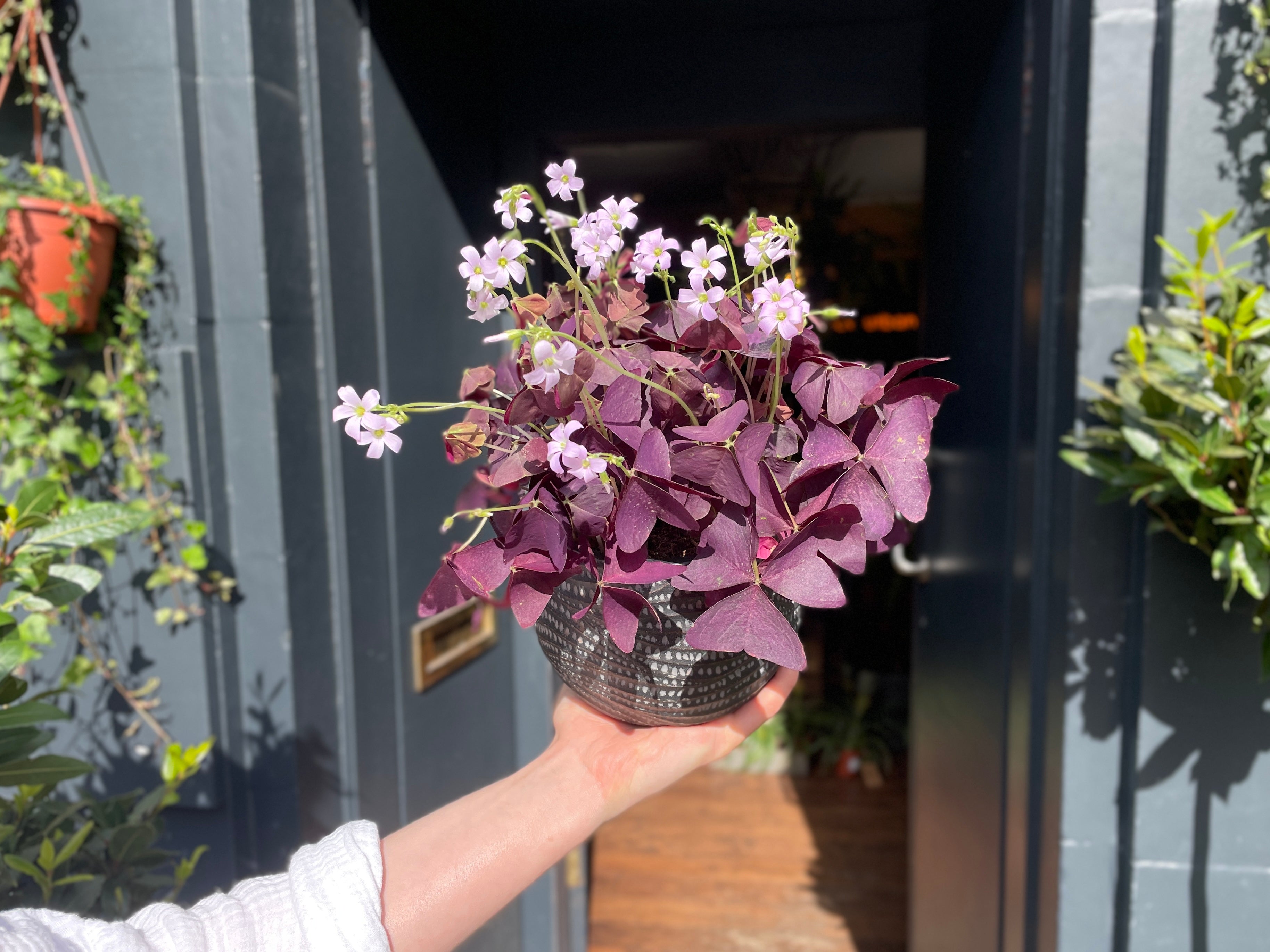
With its striking purple foliage and delicate butterfly-like leaves, Oxalis triangularis, often known as the Purple Shamrock, is one of the most eye-catching houseplants you can grow indoors. It is also one of the most misunderstood.
Many owners panic when their Oxalis suddenly collapses, loses its leaves or appears to die back. Thankfully, this is often completely normal. Understanding its natural growth cycle is the key to long-term success.
Looking for an Oxalis?
We regularly stock Oxalis triangularis 'Mijke' and Oxalis triangularis, particularly from spring through to autumn. If either is out of stock, simply click the 'Notify Me When Available' button on the product page and we'll email you as soon as fresh stock arrives.
In this guide, we'll explain everything you need to know about caring for Oxalis triangularis, including watering, light levels, feeding, dormancy and common problems.
What is Oxalis triangularis?
Native to South America, Oxalis triangularis grows from small underground rhizomes and is loved for its distinctive triangular leaves. The foliage opens during the day and closes at night, creating a fascinating daily display that gives the plant real personality.
Given the right conditions, it may also produce delicate pale pink or white flowers throughout the growing season.
Good to know: Oxalis triangularis is one of the few houseplants that visibly opens and closes its leaves every day.
Light Requirements
Oxalis triangularis thrives in bright, indirect light. Position it close to a bright window where it receives plenty of natural daylight but is protected from harsh afternoon sun.
A little gentle morning or evening sun is usually beneficial and helps maintain strong growth and vibrant colour.
If your Oxalis becomes stretched, floppy or pale, it is often a sign that it needs more light.
Watering Your Oxalis
Water when the top inch of compost feels dry to the touch. During spring and summer, while actively growing, Oxalis enjoys regular watering. However, it is important not to leave the compost constantly wet.
Always allow excess water to drain away and avoid leaving the plant sitting in water. If you are using a decorative outer pot, remove the nursery pot before watering and allow it to drain fully before placing it back inside.
Top tip: Overwatering causes far more problems than underwatering with Oxalis triangularis.
If you're unsure about watering, our guide on how to water houseplants covers the basics.
How to Keep Your Oxalis Looking Its Best
Feed every four to six weeks during spring and summer using a balanced liquid fertiliser. We recommend Liquid Gold Leaf to support healthy foliage and flowering.
Rotate the pot every few weeks to encourage even growth and prevent the plant leaning towards the light.
You can browse our indoor plant care collection for feeds, compost and other houseplant essentials.
Does Oxalis triangularis Like Humidity?
Unlike many tropical houseplants, Oxalis triangularis is not especially demanding when it comes to humidity. Average household humidity is usually sufficient.
However, avoid placing it directly beside radiators or other heat sources, as this can cause the foliage to deteriorate more quickly.
Why Do the Leaves Open and Close?
One of the most fascinating things about Oxalis is its daily movement. During daylight hours the leaves open to capture sunlight. As evening approaches they fold downwards and close.
This behaviour is known as nyctinasty and is completely normal. It is simply the plant responding to changes in light levels.
Dormancy: Is My Oxalis Dead?
This is the question we are asked most often.
If your Purple Shamrock suddenly starts to collapse, lose leaves or die back, particularly in late summer or autumn, it may simply be entering dormancy.
Don't panic: dormancy is a natural resting period and does not mean your plant has died.
What to do when Oxalis goes dormant
- Stop watering once the foliage has died back
- Move the pot to a cool location
- Leave it undisturbed for four to six weeks
- Return it to a bright position
- Resume gentle watering
In most cases, fresh growth will soon emerge from the rhizomes beneath the compost.
If you're unsure whether your plant is dormant or struggling, our guide to common plant problems may help.
Common Oxalis Problems
Leggy growth
This is usually caused by insufficient light. Move your plant closer to a brighter window.
Yellow leaves
Yellowing foliage is often linked to overwatering or poor drainage. Check that excess water can escape freely from the pot.
Brown leaf edges
Brown edges may indicate inconsistent watering or excessive heat from nearby radiators.
Not waking up after dormancy
Be patient. If the rhizomes remain firm beneath the compost, the plant is usually still alive. Return it to a bright position and water lightly.
Frequently Asked Questions
Is Oxalis triangularis easy to care for?
Yes. Once you understand its dormancy cycle, Oxalis triangularis is generally considered an easy houseplant to grow.
Can Oxalis triangularis grow outdoors in the UK?
It can be grown outdoors during warmer months, but is usually grown as a houseplant in the UK as it is not reliably frost hardy.
Why are my Oxalis leaves closing during the day?
This can be caused by low light, stress or the plant preparing for dormancy. Some movement throughout the day is normal, but if the leaves stay closed for long periods, try moving the plant somewhere brighter.
How often should I water Oxalis triangularis?
Water when the top inch of compost feels dry. Reduce watering significantly during dormancy.
Is Oxalis triangularis poisonous to pets?
Oxalis triangularis contains oxalic acid and is not considered pet friendly. Keep it away from pets that are likely to chew houseplants.
Your Oxalis triangularis Care Checklist
- Place in bright, indirect light
- Water when the top inch of compost feels dry
- Avoid leaving the plant sitting in water
- Feed every four to six weeks during spring and summer
- Do not panic if it enters dormancy
- Reduce watering during dormancy
- Keep away from cold draughts and radiators
Want One of Your Own?
Oxalis triangularis is one of our favourite houseplants thanks to its unusual foliage and fascinating daily movement. Browse Oxalis triangularis 'Mijke', Oxalis triangularis or explore our full collection of tropical indoor plants.
If you love plants with personality, you may also enjoy our Rare Indoor Plants collection, where you'll find unusual and harder-to-find houseplants for your home.